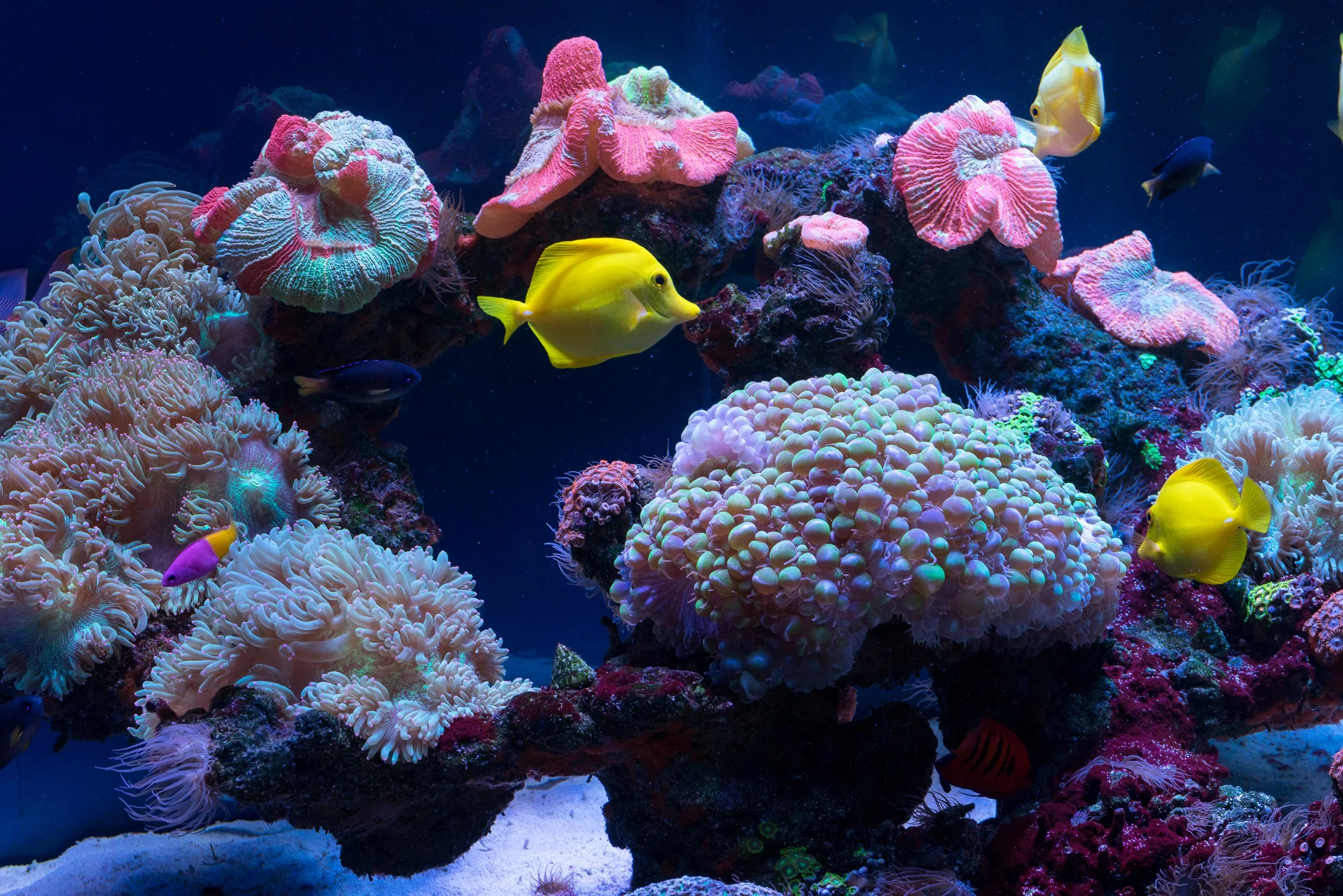
What Causes Dead Zones in Reef Aquariums?
Effective reef flow design focuses on:
Coverage patterns
Time-based exposure
Rotational or oscillating distribution
Dead zones are not random.
They are architectural consequences of static direction.
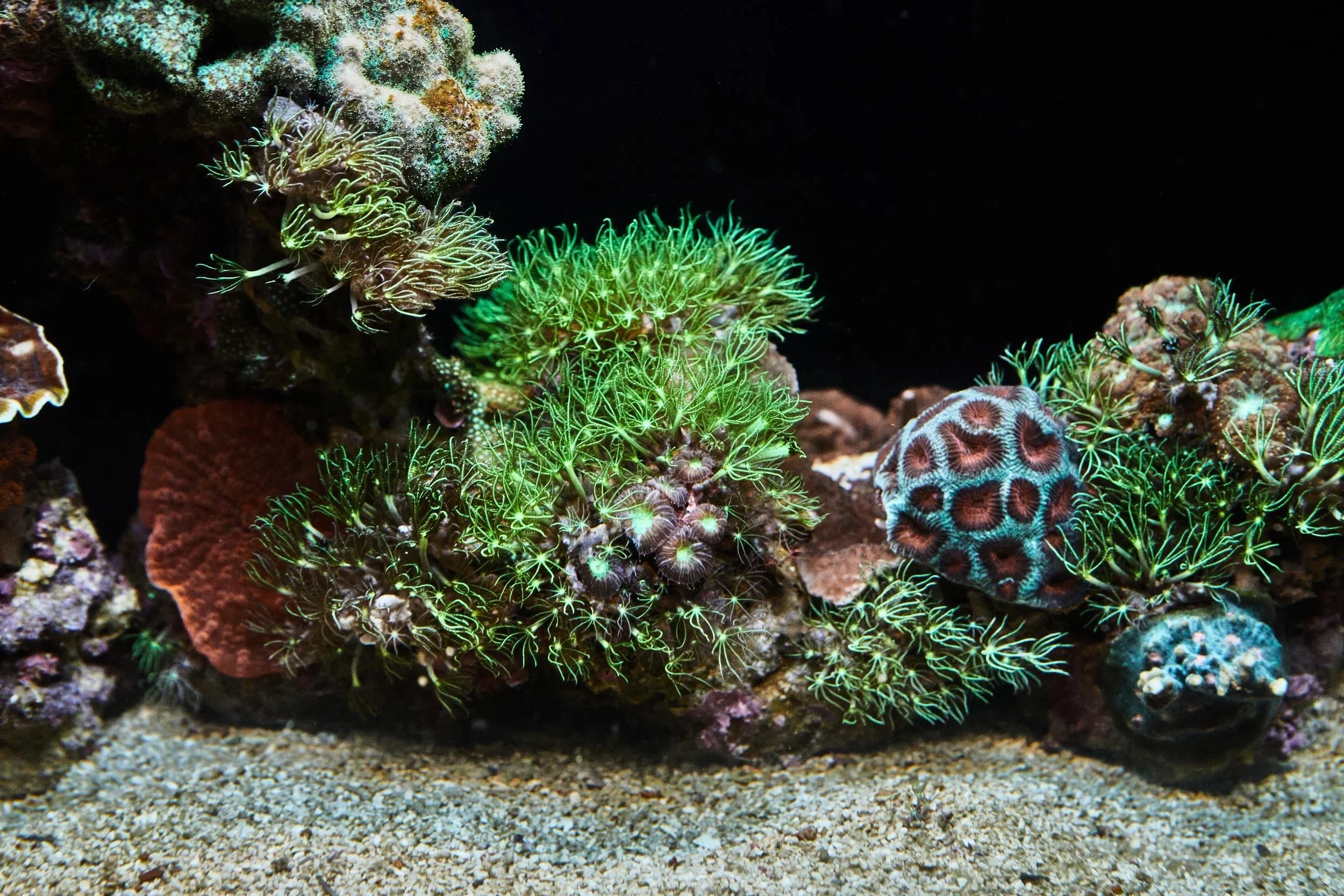
Dead zones are often blamed on weak pumps. But in most cases, they are caused by directional stagnation.
A dead zone is simply an area of the tank where water movement is insufficient to suspend debris and deliver consistent exchange.
They commonly appear:
Behind rockwork
Under overhangs
In corners
Along substrate edges
When a pump pushes water in a fixed direction, the main current creates predictable flow paths. Water takes the path of least resistance.
Areas outside that path become stagnant.
Increasing intensity does not necessarily fix this. In fact, stronger directional flow can:
Increase stress in already exposed areas
Leave shadow zones untouched
Create turbulence imbalance
The issue is not strength.
It is coverage.
To eliminate dead zones, water must periodically reach different areas of the tank.
That requires movement of direction — not just more output.
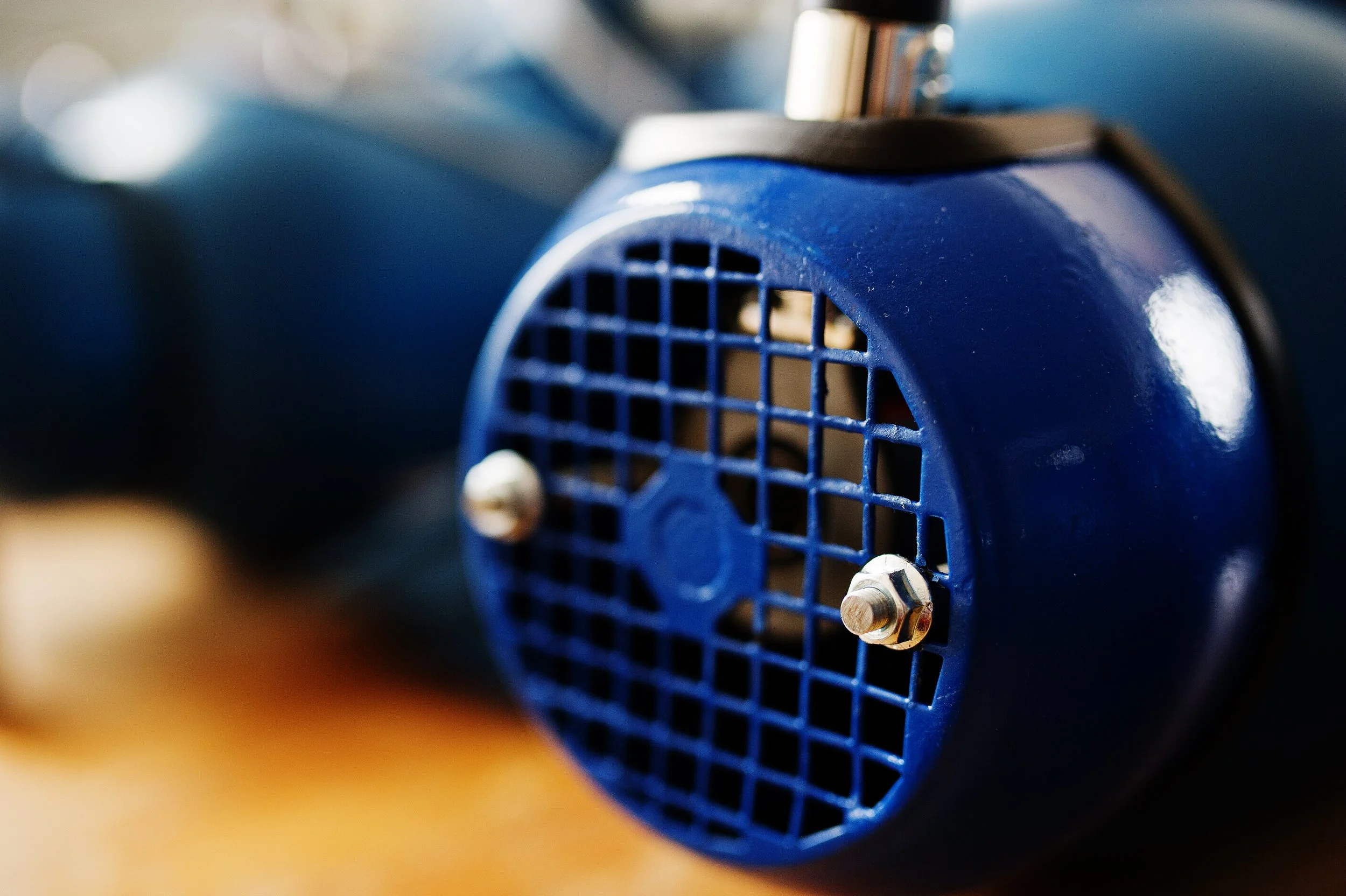
Effective reef flow design focuses on:
Coverage patterns
Time-based exposure
Rotational or oscillating distribution
Dead zones are not random. They are architectural consequences of static direction.